INSURANCE SURRENDER COST BENEFITS
Is Your Traditional Life Insurance Hurting Your Wealth? A Real Case Study on the "Surrender vs Continue" Dilemma
When planning for major life milestones—like funding your child’s higher education—every rupee needs to work hard. However, many Indian families find their hard-earned money trapped in traditional endowment or money-back life insurance policies.
While these plans offer the comfort of guaranteed returns, they often fail to beat inflation, ultimately jeopardizing the very financial goals they were meant to secure.
If you are holding a traditional policy and wondering whether you should continue paying the premiums or cut your losses and switch to mutual funds, this real-life case study will show you the power of data-driven financial decision-making.
The Case of Mrs. Kavita Desai: A Classic Financial Dilemma
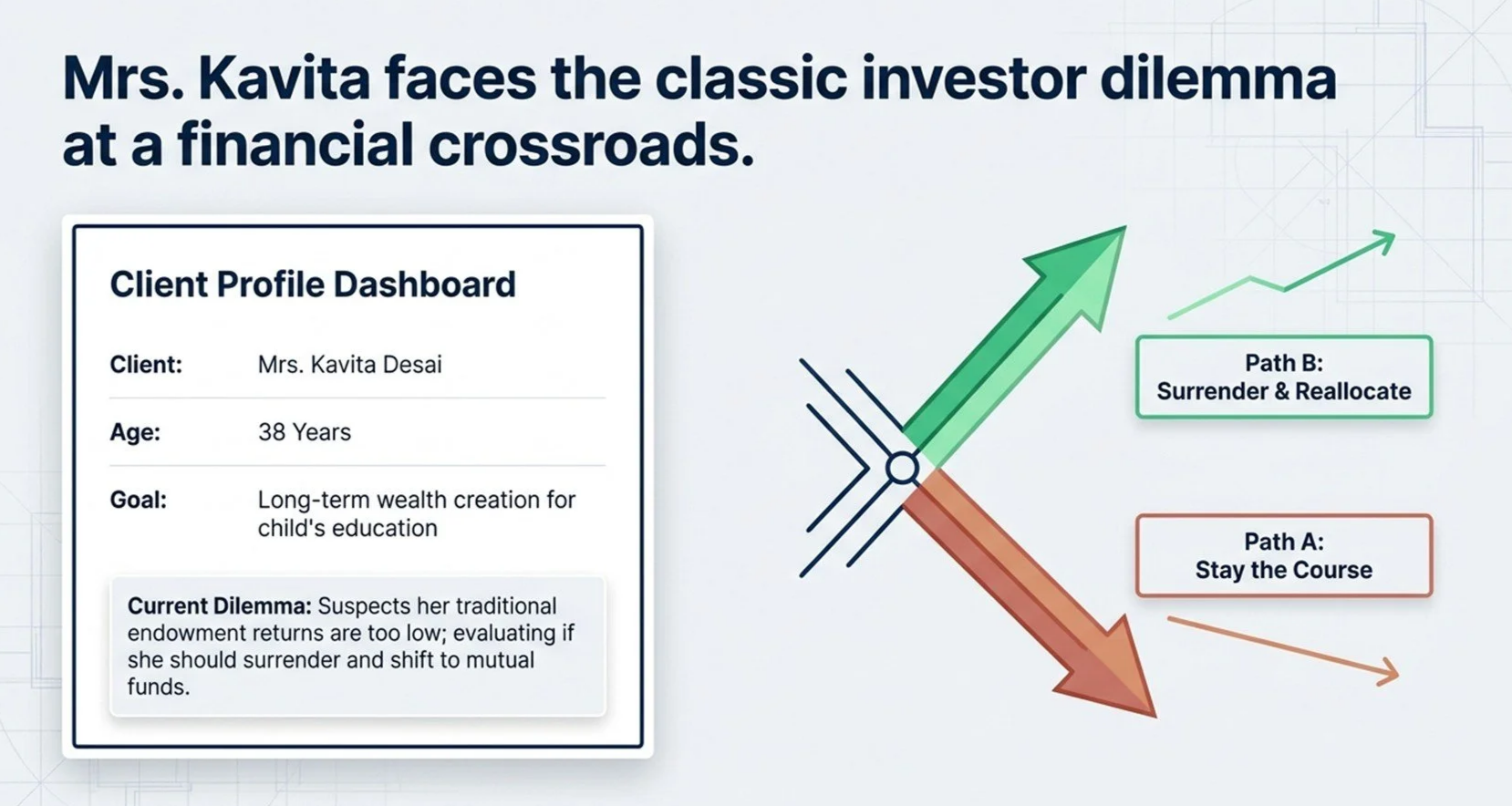
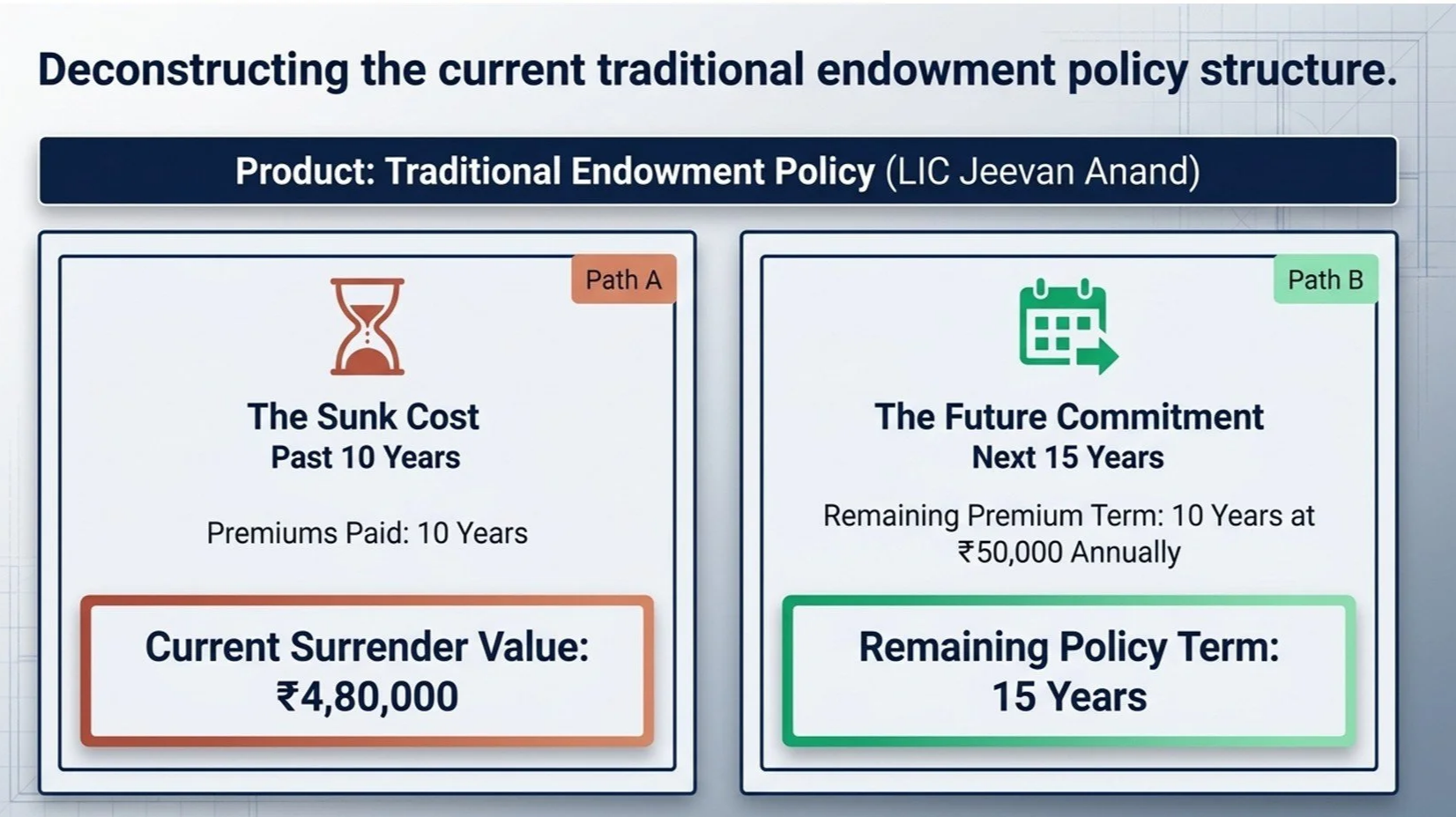
Ten years ago, Kavita purchased a popular traditional endowment policy, LIC Jeevan Anand. Here is where her investment stands today:
Annual Premium: ₹50,000
Total Premium Paying Term: 20 Years (10 years paid, 10 years remaining)
Total Policy Term: 25 Years (15 years remaining until final maturity)
Expected Maturity Value (If Continued): ₹12,50,000
Current Surrender Value Today: ₹4,80,000
Option 1: What Happens if Kavita Continues the Policy?
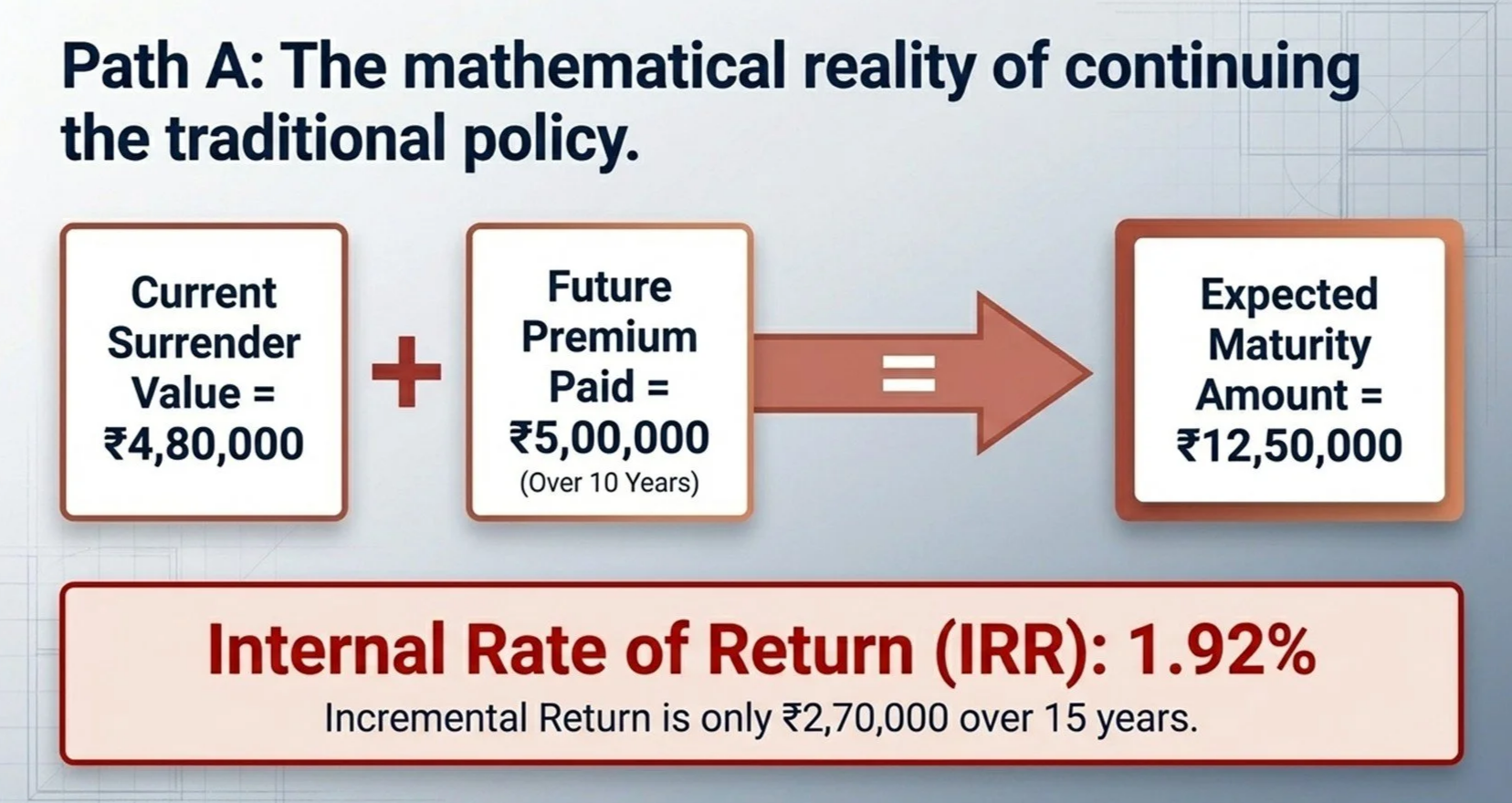
If Kavita decides to keep the policy to avoid the immediate "loss" of surrendering, she will pay ₹50,000 every year for the next 10 years (a total fresh investment of ₹5,00,000). She will then wait another 5 years for the policy to mature.
Total Future Premiums Paid: ₹5,00,000
Final Maturity Payout: ₹12,50,000
Net Incremental Return: ₹2,70,000
Internal Rate of Return (IRR): A meager 1.92%
An IRR of under 2% does not even keep pace with basic savings bank interest rates, let alone retail inflation. By locking her money here, her wealth is effectively eroding in terms of purchasing power.
Option 2: Surrendering and Shifting to Mutual Funds
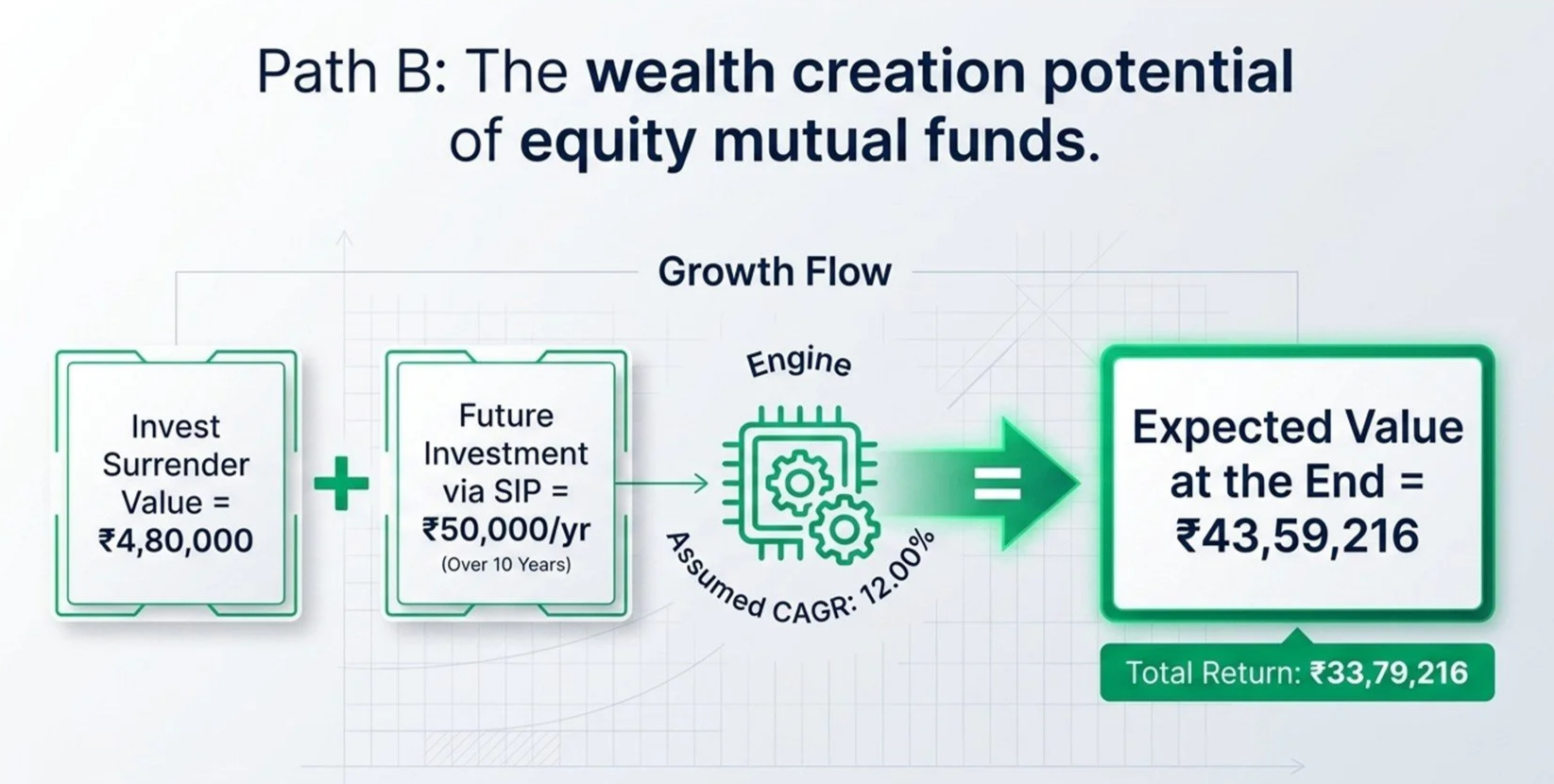
Now, let's look at the alternative. What if Kavita takes control of her financial planning, surrenders the policy today, accepts the current surrender value of ₹4,80,000, and reallocates her capital efficiently?
By deploying the ₹4,80,000 immediately into an Equity Mutual Fund and redirecting her annual ₹50,000 premium into the same fund for the next 10 years—leaving it to compound for the final 5 years—the math changes completely. Assuming a reasonable 12% CAGR return on the equity mutual funds, the numbers look like this:
Initial Investment (Surrender Value): ₹4,80,000
Future Annual Investments (Redirected Premium): ₹50,000 for 10 years
Expected Value at the End of Year 15: ₹43,59,216
Total Wealth Created (Returns): ₹33,79,216
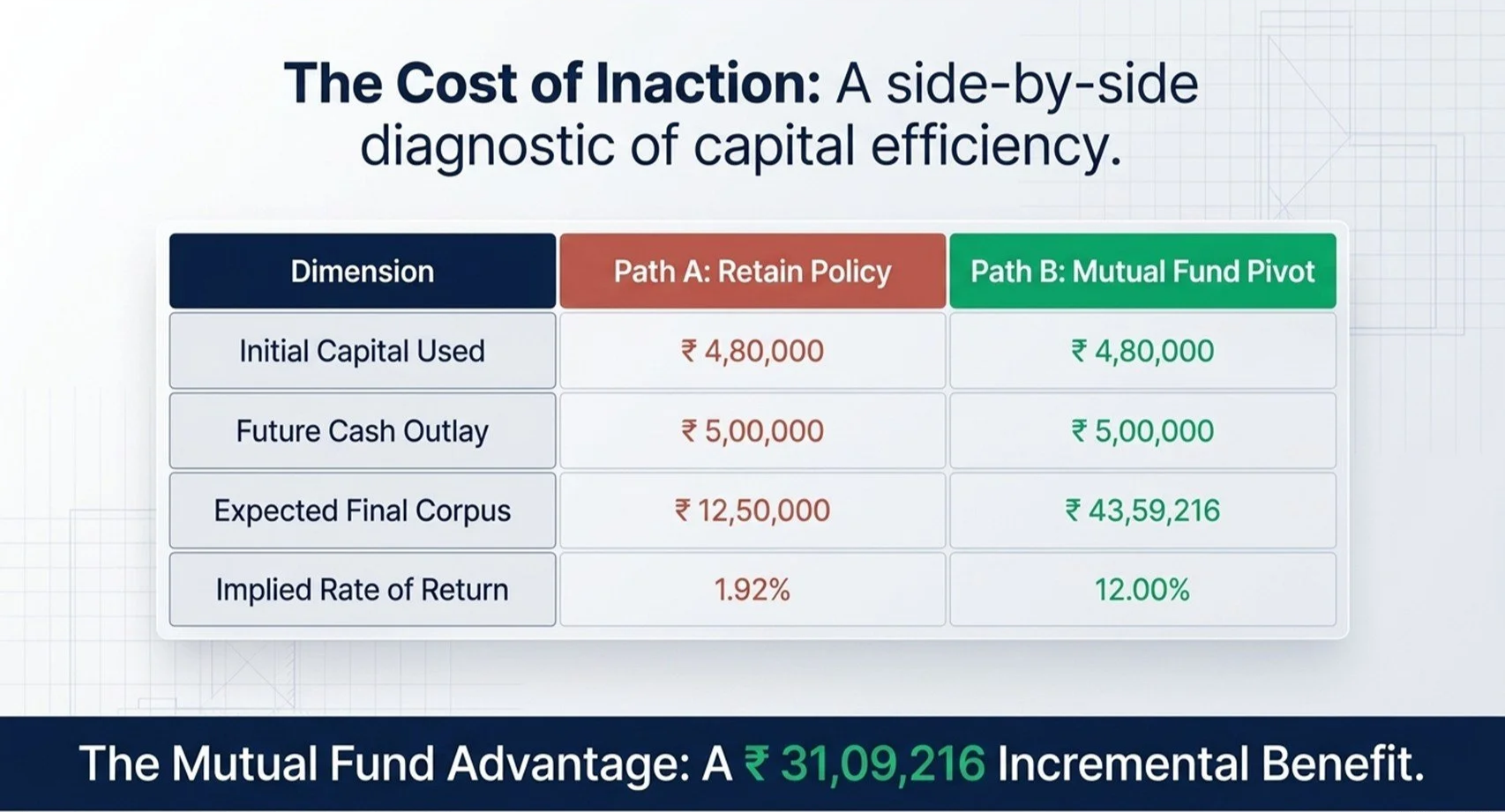
The Verdict: The Cost of Waiting
When we compare the two options side by side, the financial insight becomes undeniable.
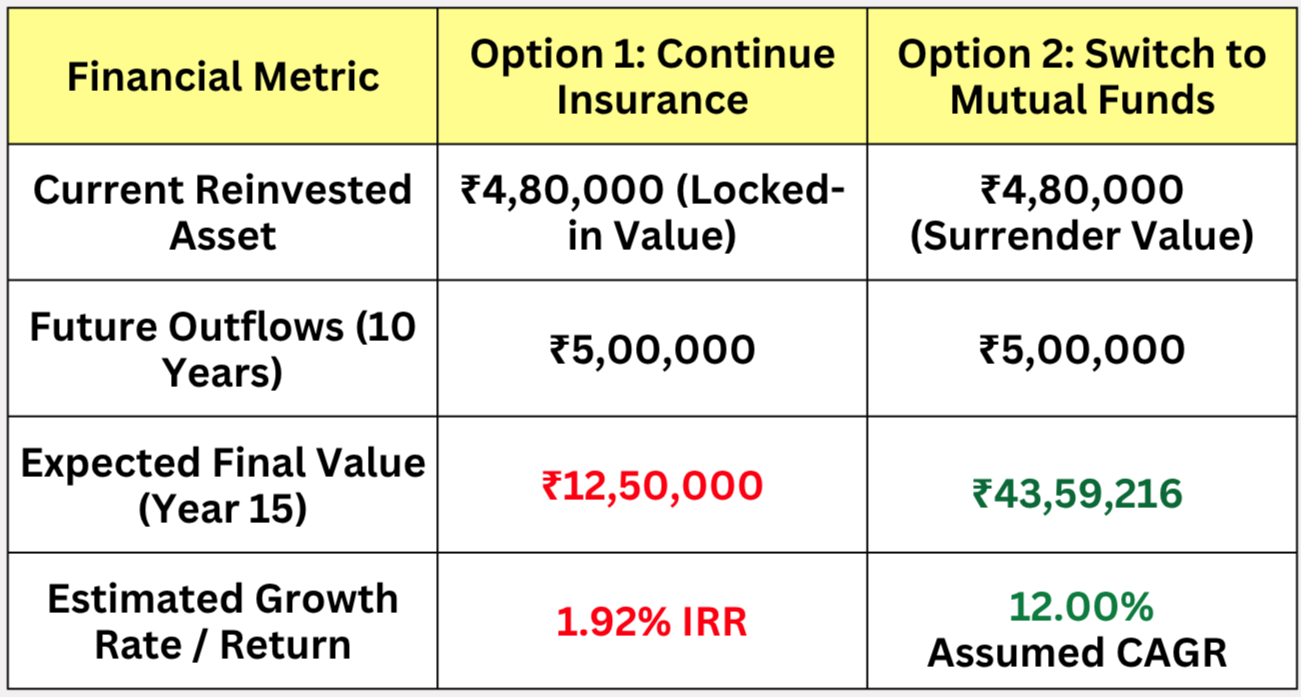

The Potential Incremental Benefit: By switching to an equity-based investment, Mrs. Kavita could accumulate an additional ₹31,09,216 over the remaining 15-year horizon. That is over 3.4X the maturity amount expected from the traditional insurance policy!
To know more, feel free to contact us.